Have you ever seen a lake so perfectly turquoise it doesn’t seem real? That was my first thought when I saw Silvretta Stausee Reservoir, that it looked fake! The jewel-like colour of the water seemed other-worldly, but it reminded me of the glacier lakes I had seen in the mountains of Peru. It was real. The glaciers in the mountains of Austria create lakes this beautiful. And what a day it was to enjoy this incredible place!
I visited Silvretta Stausee as part of a post-conference trip to Vorarlberg, hosted by Captivate Digital Media, Visit Vorarlberg and Mein Montafon. The trip was complimentary, but all views are my own.
What is Silvretta Stausee?
Silvretta Stausee is a man-made lake, a reservoir with three dams that are used to generate electricity for the regions around the lake. The Silvretta reservoir opened in 1954, and soon became a popular tourist attraction for its spectacular views of Piz Buin (one of the highest mountains in the Silvretta range of the Alps which border Austria and Switzerland), beautiful colour and fishing stocks.

How to Get There
The drive from our hotel at St Gallenkirch to Silvretta Stausee is an interesting one! The route follows the Silvretta-Hochalpenstraße, The Silvretta High Alpine Road, which links the Montafon Valley with Paznaun Valley in Tirol. It is a scenic road that climbs up to Bielerhöhe Pass and Silvretta Reservoir, via a series of over 30 hairpin bends.
If you take your own car, you might be able to stop off along the route to take photos, or you could hire an e-bike from one of the bike rental places in St Gallenkirch. It is a toll road, so be prepared to pay if you are driving your own car.
We took the bus here, getting on just outside our hotel in St Gallenkirch and taking a trip of around 30-40 minutes to reach the lake. Ask at your accommodation for the best way to reach the lake from where you are staying.
The Silvretta-Hochalpenstraße is only open during the summer, due to snow and ice in the winter making the route too treacherous. Usual opening times are from June to November, but check this website before you travel as it has more information about the opening times.

Want More Austria Travel Tips?
Check out these blog posts for your Austria vacation inspiration, or click here to read all my Austria blog posts.Things to do at Silvretta Stausee Reservoir
The wonderful thing about this gorgeous lake is that you can spend as long or as little here as you like. As it is easily accessible by road, some groups arrived here by bus, hopped off to take a few photos of the water and the dam, then got back on their bus and disappeared just as quickly as they’d come.
However, I would highly recommend spending more time here to soak up the breathtaking views, take a walk, and have something to eat at one of the restaurants on the shores of the lake.
During the summer it is an excellent spot for hiking. You can take a look at the Silvretta Stausee webcam here to see what it looks like now – it is fascinating to see the changes in the season since my visit!

Hiking Around the Lake
If you have the time and are able to do the walk around the lake I highly recommend doing so; it is more than worth the effort. The hike isn’t difficult, on a mainly flat path that goes all around the lake. There are some climbs and descents, but I would rate this as an easy walk – even possible to hike walk with children and strollers.
The loop walk is 6.3 km long and takes around two hours to complete, and there are restaurants at the end (or start) where you can reward yourself with a cool drink or some tasty food and sit back and admire the view even longer. Pop to the bathroom in one of the restaurants before you start, or use the paid public toilet in the car park.

The walk itself is no less than incredible. In the distance, the glacier and mountain peaks of Piz Buin watched over us as we walked in the sunshine. When we first arrived it was bitterly cold, but the sun rose higher and we soon warmed up.
There are plenty of places to stop and admire the view and to take photographs, and an unexpected bonus was the art installation in the tunnel near the beginning of the route.

It is hard not to be impressed by the beauty of this place. It definitely reminded me of Laguna 69 in Peru, another stunning glacier lake, although Silvretta is at a much more manageable altitude than the dizzying heights of the Andes.
Around the lake, we passed several small waterfalls cascading into the lake. Further on there was another art installation that involved a hose fed from a waterfall spraying water in an arc, creating a rainbow in the sunshine.
There were people fishing and other families enjoying the lake, although in the morning it was blissfully quiet. as the day wore on, more visitors came to admire the waters and the views around the lake, so I’d suggest arriving in the morning to have the lake practically to yourself!

Other Hiking Trails near Silvretta Stausee
As well as the Silvretta Stausee loop walk, there are other trails leading off from the path around the lake. While we didn’t take any detours, I later learned that one of the paths leads to another more challenging hike to the Wiesbadener Hütte – a hiking refuge where you can spend a few nights and take further hikes and climbs into the mountains, including to Piz Buin.
You could also hike to Wiesbadener Hütte and back in one day, it’s a distance of 14.2km there and back, taking around 5 and a half hours to complete the route, which is classed as medium difficulty.
Biking Around the Lake
We also saw several people cycling around the lake. As the trail is flat and suitable for strollers, it is also ideal for cycling – whether you decide to bike the Silvretta High Alpine Road to get here, or bring your bikes to ride around the lake, it is a fabulous spot to cycle.

Silvretta Stausee Via Ferrata
One of the more adrenaline-fuelled activites around Silvretta Stausee is a via ferrata route up one of the dam walls. If you’re not sure what a via ferrata is (I had to Google it too), it’s Italian for “iron path” and its a bit like rock climbing, but you’re attached with a harness to a metal cord that you clip yourself to then unclip and reattach at each point where the metal cord is bolted to the rock.
Apparently, it is easier than rock climbing, but as I’d never tried that either I had no idea what to expect! I was excited to try something new and adventurous, but when I realized that we would be climbing up the almost vertical face of the dam, I became less enamoured with the idea. However, I’m always up for trying things so I was the first to volunteer and clipped myself to the beginning of the via ferrata trail.

It all seemed easy enough until I began to actually climb up the wall. I had expected that there would be enough hand and foot grips to climb up, but there were places where you had to basically walk up the wall. I wasn’t sure if I didn’t trust my hiking boots to grip the wall or my ability to actually put one foot in front of the other, but I made it maybe 6 feet off the ground when my body refused to go any further.
There were shouts of encouragement from my companions below, and instructions from our guide above me, but I simply could not do it. I tried to find a way to progress up the wall but try as I might I may as well have been glued to the spot.
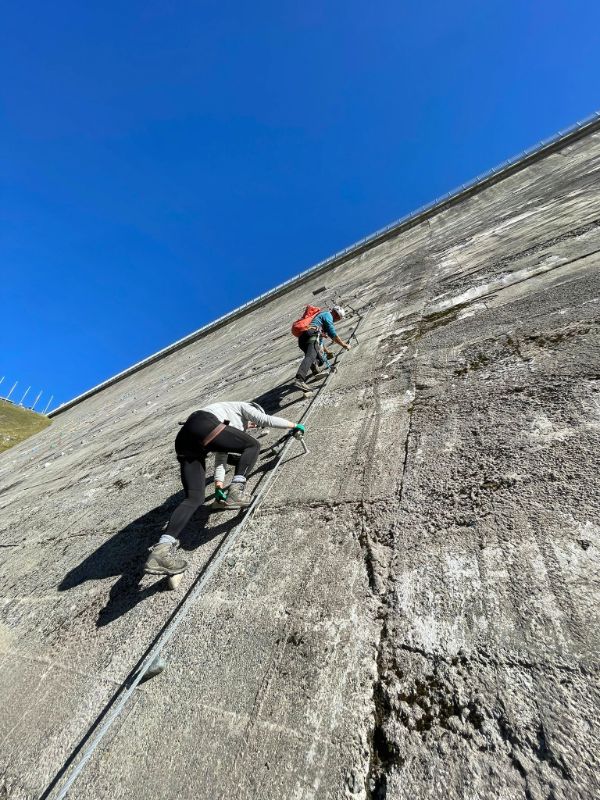
Once it became clear to me that if I couldn’t make it more than 6 feet up I obviously wasn’t going to be able to complete the rest of the trail I clambered back down to solid ground and sat on a bench, panting as my legs shook uncontrollably. I may or may not have had a little cry as I sat there trying to convince myself that I was not going to die and that I was now safe and sound.
I watched the others in my group take their turns, and admit I was a little relieved when another of them had similar challenges to me, and as three of the brave (crazy?) women carried on along the trail, Lora and I resigned ourselves to walking up to the top of the dam to watch them from above.
This turned out to be the best idea, and I had absolutely no regret about my decision to not force myself to climb up the side of the dam in a death-defying moment of faux bravery. I’ve spent enough time travelling on my own to know what feels safe and what doesn’t, and I know my limits.
That said, of the three who managed to complete the whole course, two absolutely loved it, and had a blast clambering and jumping their way around the course. The third, however, burst into tears part way along and was on the verge of a panic attack for most of the way. She did complete it though, so much kudos to her!!

Basically the moral of the story is that if you are an adventurous sort who loves this kind of stuff then you cannot miss the chance to take the via ferrata. But, if you’re not, then you will certainly have enough to keep you happy with the views around the lake.
To book your guide for the via ferrata, contact Bergführer Montafon, the association of mountain guides who arrange various tours in the region, including hikes, mountain climbing, via ferrata routes and more. Their website is currently only in German, but our guide Hanno spoke excellent English.
Alternatively, the Mein Montafon tourist board website also has full information about the tour. All safety equipment was included, that is helmets, harnesses and gloves, but you will need good footwear such as sturdy walking shoes or boots with a good grip.
Where to Eat at Silvretta Stausee Reservoir
When we’d finished our hike around the lake, we had lunch at Silvretta-Haus, which has a menu of traditional and international dishes. We ate on the terrace, with excellent views of the lake, and even had to ask for the umbrella to be put up as it was a real sun trap!
I ordered a grilled fish dish which was delicious, and a topfenstrudel cheese strudel for dessert. When in Austria I find it impossible not to eat strudel! The restaurant is also a hotel and gets great reviews.
Alternatively, for a more informal option, you could try Restaurant Silvrettasee right on the lakeshore, perfect for a quick drink or a snack.

Accommodation at Silvretta Stausee Reservoir
As I mentioned, Silvretta-Haus is a 3-star hotel that gets great reviews, and I’m sure the lake-view rooms are lovely. However, if you would like to see more of the Montafon region, I’d recommend staying elsewhere and coming to the lake on a day trip.
We stayed at the Sporthotel Grandau in St.Gallenkirch, a fabulous family-run hotel that I loved. Yvonne and her husband Milko have created a wonderfully quirky hotel with bags of personality – and a very cute dog called Adam who is often lounging around reception.
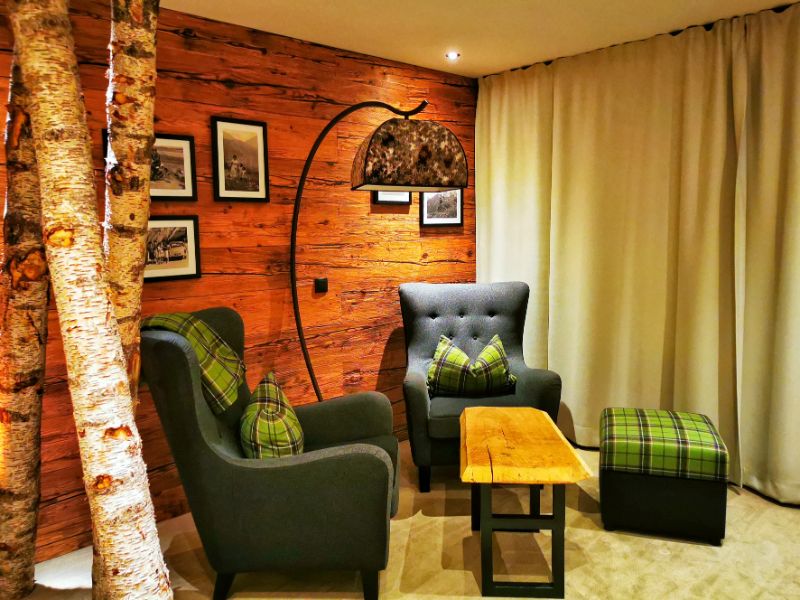
The hotel had everything we could possibly need. The restaurant was fabulous – so much so that we dined here for two nights in a row! The breakfast buffet was also top-notch, with a wide variety of foods including fresh fruit, a juicing station, cereals, granola and yoghurt, bread, jams, marmalades, a cheese board and hot items like scrambled eggs and sausages. A perfect start to a day hiking!
In the evening, when we returned there was time to hit the spa with a pool and several saunas, and I had a massage one evening too which was heavenly.
You can book directly on their website, or through booking.com here.
I hope this has inspired you to visit the Vorarlberg region of Austria. It is still somewhat of a hidden gem for English-speaking visitors, but everyone I met spoke perfect English and was more than happy to see us. I loved exploring Vorarlberg, and have more articles coming soon!