
Food, glorious food. Food in Lisbon is amazing, and although Portuguese cuisine is not as well known as it’s Spanish neighbour, the flavours, produce and local dishes available here are good enough to rival any top foodie destination. To learn more about the food in Portugal and where to eat the best food in Lisbon, I contacted Taste of Lisboa to see if I could join one of their cultural food tours in Lisbon. They suggested their Downtown-Mouraria Food and Cultural Walk which was in a part of Lisbon renowned for Fado, a traditional form of music in Portugal. I was excited to join their Lisbon food tour for lots of tasty food and to learn something at the same time!
I received a complimentary tour in exchange for my honest review. All opinions are my own and I maintain full editorial control over the content published.
Know Before You Go to Lisbon
Before travelling to Lisbon, make sure you book accommodation and popular attractions ASAP as hotels and tickets can sell out, especially in busy holiday periods.
🛌 MY RECOMMENDED HOTELS IN LISBON:
$$ Zurin Charm Hotel: A small romantic hotel in the Campolide district of Lisbon
$$ Alegria A Lisbon Boutique Hotel – lovely hotel in a beautiful old building
$ Good Morning Hostel – I loved this friendly hostel, it’s perfect for solo travellers
⭐ TOP 3 LISBON ACTIVITIES TO BOOK IN ADVANCE:
We met our guide Catarina at the memorial in São Domingo’s Square, on a cloudy and damp afternoon in Lisbon. I was pleasantly surprised to find I wasn’t the only solo female traveller on the tour. For me, food tours are a great alternative to dining alone when I’m travelling solo and a lovely way to meet local people and fellow travellers as well as eating lots of tasty food!
This tour was no different, but Taste of Lisboa’s food and cultural walks differ from a ‘typical’ food tour because they include much more information about the local area, culture and community. When we met Catarina, she explained how the tour would work, and the awful history of the square where we were.
Throughout the tour Catarina shared more information about Mouraria, Fado and the history of Lisbon, as well as taking us to some fabulous foodie stops.

Our first stop was a foodie’s dream. A delicatessen selling fresh fruit and vegetables from a display outside, and inside it was a treasure trove of cheeses, cured meats, pates, oils, wine and bacalhau.
YOU MAY ALSO LIKE: The Best Things to do in Lisbon in Winter
Bacalhau is salted cod, most of which comes from colder seas around Iceland and Norway. The Portuguese developed a taste for salted cod during the days of exploration across the oceans when they needed protein which would keep for months on the long voyages. These days, cod is an obsession.

We didn’t taste any cod here though, despite the piles of it for sale. Instead, we tried some olive oil and pata negra cured ham. The ham is from a certain breed of pigs, which feed on acorns to give the cured meat a special flavour. It was melt-in-the-mouth delicious.

Before I came to Portugal I hadn’t really considered that olive oil has a flavour, and that flavour can change drastically depending on the quality of the oil. The cold-pressed olive oil we tasted with fresh bread was smooth and mellow, a perfect accompaniment to the ham. One of the other women in the group was vegetarian so we also got to try some creamy soft cheese with walnuts as well.

It wasn’t long before cod made an appearance on our tasting trail though. Our next stop was a small café which claimed to have the ‘best codfish croquettes in Lisbon’ – a bold statement indeed.
I had realised by this point that most restaurants in Portugal claimed to have the best whatever in the city, country, or even universe. I don’t know how anyone could claim they have the best anything in the universe without going to the effort to try out of this world examples of the dish, but anyway, Catarina said that she had tried a lot of cod croquettes in Lisbon, and that these were indeed the best ones in Lisbon, that she had tried at least.
They were pretty good, but without more diligent research I can’t confirm or deny their claim! The croquettes were served with a tomato rice side dish wish was very tasty too, and a glass of vinho verde, Portugal’s green wine.

We continued our food and cultural tour with another Portuguese typical dish – a bifana. These sandwiches are made from fresh bread buns, filled with grilled meat, in most cases pork.
YOU MAY ALSO LIKE: Mistakes to Avoid in Lisbon
The little restaurant we went to used to sell charcoal in the days before electricity, then when the demand for fire-power declined in the city, they decided to use the excess coal for barbecuing. And the tradition continues, with a menu of simple grilled meats, as well as traditional soups and cheeses which we also sampled, and other simple, delicious food.

We ventured into the neighbourhood known as Mouraria. Mouraria is famous for being the home of Fado, a traditional type of Portuguese music often involving mournful singing and guitar playing. All around Mouraria we could see the influence of Fado, from the street art portraits of famous Fado singers, to tunes playing in the bars, restaurants and homes we passed.

Mouraria also had fabulous street art. There was a street filled with portraits of famous Fado singers, and several colourful murals we passed portraying everything from day to day life to Fado and the challenge of immigration in Europe.
YOU MAY ALSO LIKE: Gorgeous Fairytale Castles in Sintra Portugal
There was also a street which had photographs of the local people who lived there, including their names so you could get to know the locals even if you hadn’t met them in person!
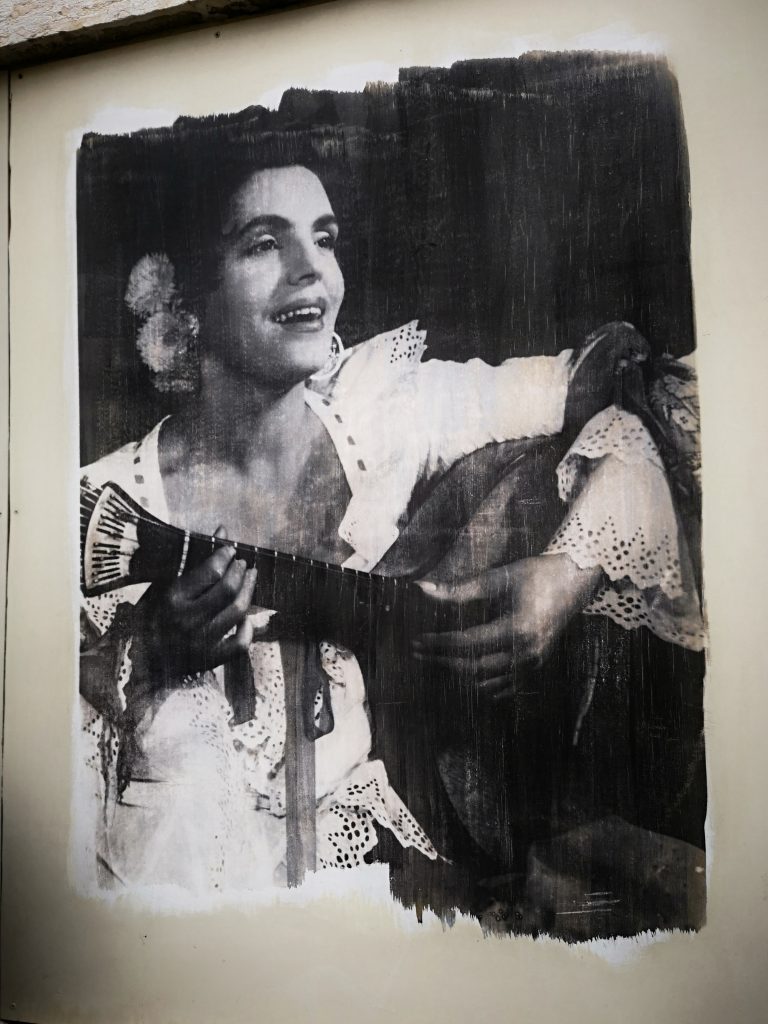

Continuing with the food and drink tastings, our next stop was a bar. It wouldn’t be a real food tour if there wasn’t any booze, and although we’d had wine at most of the stops before, a shot of sour cherry liqueur was just what we needed on a chilly evening.
We ducked out of the rain into a tiny bar, where the owner serves up ginjinha – literally meaning ‘small ginja’ shots of liqueur made from cherries into plastic cups which we gladly imbibed. Fado music drifted out of the speakers and posters from fado performances filled the walls, alongside photographs of the owner throughout the years.

Tinned fish used to be one of Portugal’s top exports, but that fell out of favour and many of the tinning factories closed down. In the last few years though, tinned food has been making a comeback. There are now several restaurants in Lisbon which specialise in tinned fish and seafood.
I must admit, I was sceptical, not usually eating much tinned fish apart from tuna. However, the delicate fish drizzled in olive oil served on crunchy toast with a tang of raw onion and herbs was much tastier than I expected!

Another dish I didn’t expect to eat on a Portuguese food tour was the samosa we tried at our next stop. You may be wondering (as I did) what the hell a samosa is doing on a food tour in Lisbon, but Catarina explained that in Portugal’s period of empire, explorers travelled to Africa, and Mozambique was under Portuguese rule for many years.
This restaurant serves up Portuguese and Mozambican food, a fascinating blend of cuisines which is definitely delicious! I washed down the samosa with a glass of cashew fruit juice, a taste I recognised from my time in Belize, where cashews also grow.

We ended our cultural food tour at a popular bakery, where we had our obligatory pastel de nata. I love these things, crisp, flaky pastry tarts filled with sweet custard and a sprinkling of powdered sugar or cinnamon on top.
I lost count of how many I’d had in Portugal, and actually, I’d popped into this bakery the day before as I’d heard their pasteis de nata were the bomb. And that they were!
With our group, we sat upstairs, and Cristina explained the history of this famous Portuguese dessert, from the monks in Belem creating the first recipe, to the thousands of bakeries churning out millions of them every day, which are devoured by willing locals and visitors alike.

What I loved about Taste of Lisboa Food & Cultural Walks
I loved the variety of places we visited. Each of the seven stops was unique in their own way and were mostly tiny cafés and restaurants which I never would have gone into myself. The cultural parts of the tour were really interesting too, and it was fascinating to learn about the history of Fado in the area, and new street artists giving names and personalities to the people who live there.
YOU MAY ALSO LIKE: Where to Eat in Lagos Portugal
I hadn’t been to the Mouraia neighbourhood before the tour, and I suspect it often gets overlooked by visitors who stick to Barrio Alto and only come here to visit the castle. There is so much history here – and great food! – I’d urge anyone coming to Lisbon to explore.

Anything I Didn’t Like?
At first I found the tour a little slow-paced; we spend quite a long time at the meeting point, where Catarina went through all the stops we were going to visit and what we were going to eat – for me that wasn’t necessary, and kind of spoiled the surprise so I’d be happy to skip that part and just see each one as they come. However, once we were on the move there was a better balance between walking, information and tasty food!
Would I Recommend Taste of Lisboa Tours?
Most definitely! I’ve taken a lot of food tours around the world, and I am consistently pleased with the quality and variety of food, and with all the interesting information the guides share. Yes, you can go for a meal by yourself, but joining a food tour is so much more rewarding!

Where to Stay in Lisbon
Since Lisbon is such a big city, finding the right place to stay is really important if you want to avoid spending time travelling to attractions on public transport or having to walk for miles up and down Lisbon’s steep streets.
I recommend booking accommodation close to the Restauradores metro station and the Rossio train station. Staying in this area means you’ll be within walking distance to almost all of Lisbon’s top attractions, with both the metro and train nearby if you’re looking to take a few day trips.
Hotels in Lisbon
The standard of hotels in Lisbon is generally pretty high, and in winter it won’t be hard to find a brilliant place to stay in Lisbon on a budget.
If you’re looking to stay in central Lisbon, check out Tempo FLH Hotels Lisboa. From just €69 per night, you’ll get a spotless double room with breakfast included. Each guest room is bright and airy, and since it’s located so centrally you’ll save money on public transport since you’ll barely have to take any! You can find other hotels in Lisbon on Booking.com, like the examples below.
Zurin Charm Hotel: A small romantic hotel in the Campolide district of Lisbon with a crisp, clean, and modern look. Sao Jorge Castle and Commerce Square are less than 5 km away. >>>CHECK PRICES & AVAILABILITY
Alegria A Lisbon Boutique Hotel: The architecture and design of this renovated building dating back to 1865 is inspired by authentic Portuguese culture. History and culture buffs will love staying here and being surrounded by 19th century mansions. >>>CHECK PRICES & AVAILABILITY
Hostels in Lisbon
I stayed at the fun and friendly Good Morning Hostel Lisbon which is in a great location by Restauradores underground station. This is probably the best place to stay in Lisbon for solo travellers, with a daily happy hour including free sangria and beer, and lots of fun events and social dinners. Rooms are clean and spacious, and the staff are all fabulous. Read my full review of Good Morning Hostel Lisbon here or book it now. You can also find other hostels in Lisbon on Hostelworld.
Airbnb in Lisbon
If you prefer to stay in an apartment in Lisbon then Booking also has some amazing vacation apartments in Lisbon, and they often have better cancellation terms than Airbnb. There are also various options for Airbnbs too, take a look at some of the rental homes available here.
Have you taken a food tour in Lisbon? What did you think? Any more recommendations for where to eat in Lisbon? I’d love to hear your tips, please leave your comments below.

Want More Portugal Articles?
Check out these blog posts to learn more about fabulous things to do in Portugal, or click here to read all of my Portugal posts.Like this post? Pin it to read later:

I became hungry after reading this article. Portugal has so many unique and delicious foods – but when I visit, I will really go for the wine!
Taking a food tour when you’re traveling alone is a great tip to avoid dining alone! I love that Taste of Lisboa brings you in at the ground level so you really understand the culture and community in addition to the cuisine. Those bifanas look absolutely delightful!
Food tour in lisbon sounds amazing, i have been to Porto but not Lisbon but I think its about time to book that flight to Lisbon, reading this and looking at the sumptuous food makes me hungry plus a great day photography finding street arts is perfect!
I love these cultural food walks and I am glad you too enjoyed yours. Indeed surprising too see the samosa making an appearance here and informative to also know a bit of its history! Thanks for this informative and interesting post 🙂
What else can one expect from a Lisbon food tour than absolutely delicious bites? Is it strange that the samosa and Pasteis de Nata appeals to me most? It must be because of my South African heritage where versions of these are national dishes. The street art in Mouraria looks great. And I love the idea of looking at pictures of the locals to make you feel right at home.
Wow tempting dishes each. I was not aware of the Mozambique connection to samosa, they are hot fav of Indians. Those fresh bread buns look very filling. Missed out on such a good food tour while I was in Lisbon.
We absolutely loved the food in Portugal. We ate our way around the cities we visited. But a food tour looks like a good idea. Especially if you want to get more information about the local culture. We loved spots with Fado music for entertainment. We were actually surprised at how little cod we ate. We tried Ginja first in Lisbon. But it was so much better when we stayed in Obidos. I need to go back! Miss the nata tarts so much.
So glad you ended your food journey with Pasteis de Nata. They are the perfect ending. I ate about 10 a day when I was in Lisbon. Which bakery did you go to?
Food tours are one of my favorite ways to discover cities. There’s usually a lot of history and culture tied to the traditional foods and I find that fascinating. I haven’t been to Lisbon, but I have been to Porto and the north. I think I need to do a food tour because I was not impressed with Portuguese food. I felt like all we had was rice dishes. And I could probably do without the canned fish. But I keep hear people raving about Portuguese food, so I need to give it another try.
The food tour does seem to showcase a variety of flavors. However, what I think I loved was the way you have caught the street art. Some of those pieces like the black and white portrait is just awesome. Almost as if someone has pasted a photograph on the wall.